
Brake Repair in Lahore
Brakes are a safety system, so we never rush them. If your brakes squeal, grind, pull or feel soft, get them checked soon.
By the Safdar Auto Workshop team · Walton Road, LahoreSigns your brakes need attention
- Squealing when braking
- Grinding noise
- A soft or sinking pedal
- The car pulling to one side
- Vibration through the pedal or steering wheel
- Brake warning light on
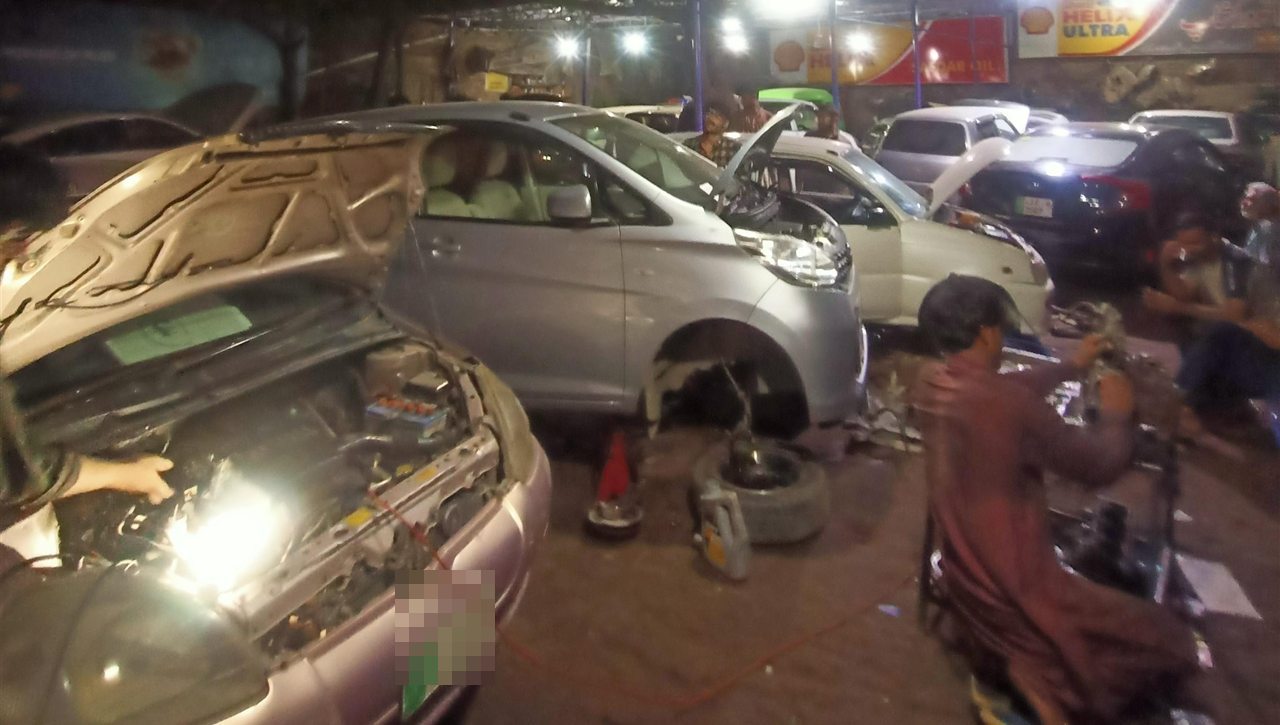
What we check
- Pad thickness and disc condition
- Brake fluid level and condition
- Calipers, hoses and lines for leaks
- Handbrake operation
Why we explain before replacing
Pads wear at different rates depending on your car and driving. We show you the wear so you can decide.
How your brakes work
When you press the pedal, hydraulic pressure pushes brake pads against discs, or shoes against drums, and friction slows the wheels. Brake fluid carries that pressure, and pads wear down every time you stop. Because brakes are a wear item, they need checking regularly, not only when something goes wrong.
What each symptom can point to
- Squealing: worn pads, or glazing from heat
- Grinding: pads worn through to metal, which can damage the discs
- Pulling to one side: a sticking caliper, uneven pad wear or a tyre issue
- Soft or sinking pedal: air or a leak in the hydraulic system, which needs urgent attention
- Vibration when braking: uneven or warped discs
- Brake warning light: low fluid, a fault or the handbrake
Brake fluid is not forever
Brake fluid absorbs moisture over time, which lowers its boiling point and can cause corrosion. Manufacturers give a replacement interval in the owner manual. If you have not had it done, ask us to check it.
Heavy traffic is hard on brakes
Constant stopping and starting in city traffic wears pads faster than open-road driving. After driving through water, brakes can feel weaker for a short time, so test them gently once you are clear of the water.
When to stop driving
If the pedal sinks to the floor, if there is a strong grinding sound, or if the car will not stop in a straight line, do not keep driving. Have the car moved and checked.
Disc brakes and drum brakes
Most cars have disc brakes at the front, where most of the braking force is applied. Some cars use drum brakes at the rear. In a drum system, curved shoes press outward against the inside of a drum, and wear shows up as shoe thickness and drum condition. Each type needs checking, and a thorough brake inspection looks at all four wheels, not only the ones that make noise.
Pad materials and their trade-offs
Brake pads are made from different materials. Organic pads tend to be quieter and gentler on discs but wear faster. Semi-metallic pads handle heat well but can be noisier and produce more dust. Ceramic pads are usually quiet and clean but cost more. The right pad depends on your car and how you drive, so we explain the options on the estimate rather than choosing silently.
Bedding in new brakes
New pads need a short period of gentle use so they match the disc surface. During that time, avoid hard braking from high speed if you can. If you feel vibration or hear new noises after a brake job, tell us so we can check it.
What the ABS light means
ABS, the anti-lock braking system, helps prevent the wheels locking under hard braking. If the ABS warning light stays on, the system has detected a fault, often with a wheel speed sensor or its wiring. Normal braking usually still works, but the anti-lock function may not, so it should be diagnosed soon.
Handbrake and parking brake
A handbrake that needs to be pulled far up, or that does not hold on a slope, may need adjustment or a repair. It is a safety item and a common reason for failed inspections in many places.
Brake care in monsoon season
Rain and standing water reduce braking performance until the discs and pads dry. After driving through water, brake gently a few times to clear the moisture. If the car pulls to one side or the pedal feels different after a flood, have it checked.
Frequently asked questions
Is it safe to drive with squealing brakes?
Squealing can be an early wear warning. Have the brakes inspected soon, and stop driving if you hear grinding or the pedal feels soft.
How do I know if I need new discs?
Discs may need replacing if they are worn below their limit, scored or warped. An inspection confirms it.
How often should I check my brakes?
At every service, and any time you notice a new noise or change in pedal feel.
Do I need to replace pads and discs together?
Not always. Discs are replaced when they are worn, scored or warped. We show you the condition so you can decide.
Can you fix brake problems the same day?
Often, if parts are available. We tell you after inspection.
How can I tell if my brake fluid needs changing?
It cannot be judged by looking alone. Moisture content is tested or the interval is followed from your manual.
Why do my brakes squeal in the morning?
Light surface rust on discs can cause a brief squeal that clears after a few stops. Persistent squealing is worth checking.
Related guides and services
Call or WhatsApp Safdar Auto Workshop on 0300 9406506 or visit us at Qasayon Wali Gali, Shah Taj Colony, Walton Rd, Lahore (Shah Jahan Street, behind Basra Brothers). We give a written estimate before any work starts.
Contact us